
For years, Dubai’s rental market has been a dynamic and often unpredictable space, shaped by rapid population growth, evolving tenant demands, and a constant flow of new developments. While many market watchers have been focusing on rising rents across prime and luxury properties, recent data suggests that certain categories are showing a notable shift towards stability.
In a recent Gulf News feature, Aakarshan Kathuria, CEO of RiseUp, highlighted this emerging trend:
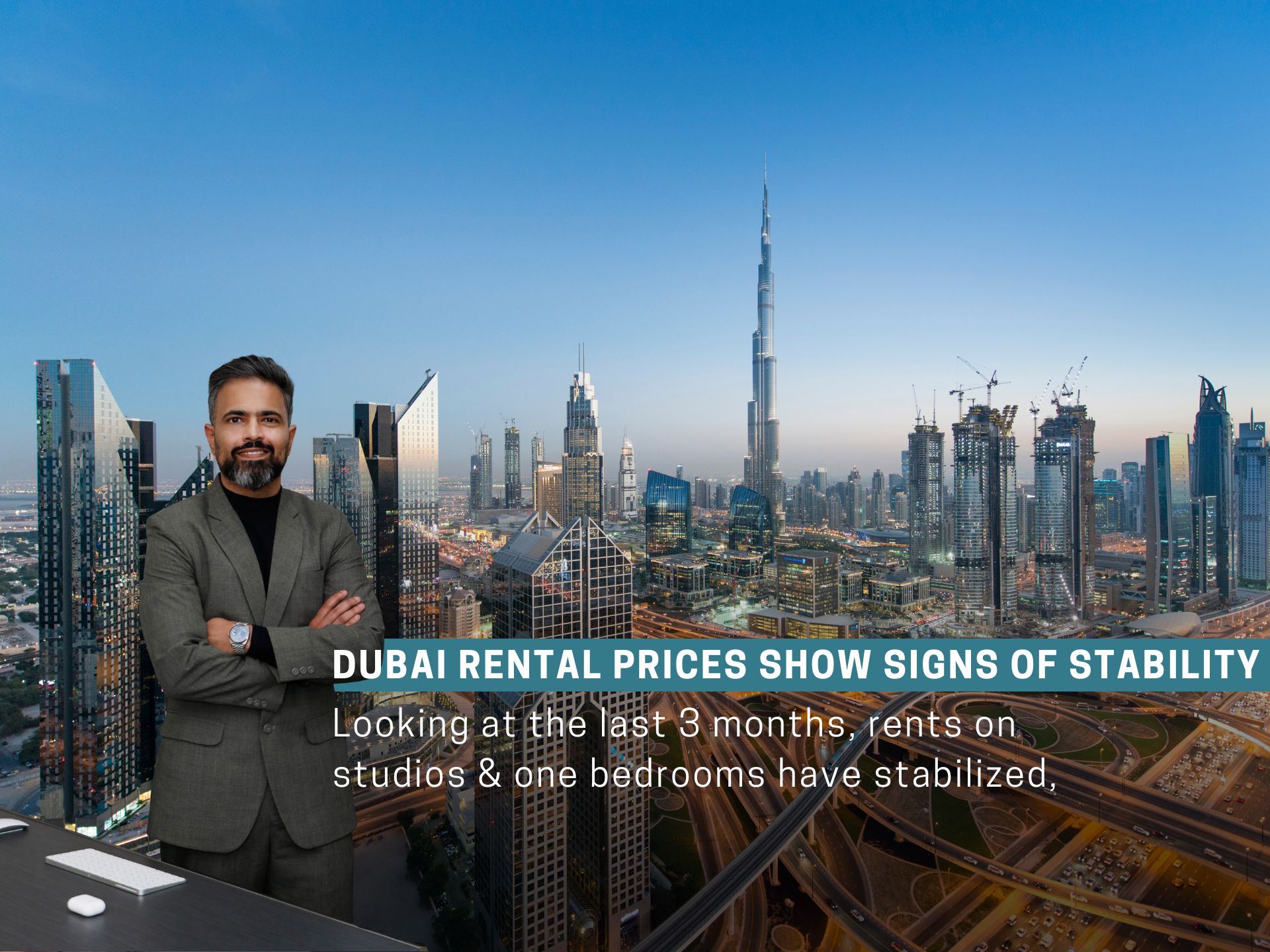
“Looking at the last 3 months, rents on studios & one bedrooms have stabilized, we don’t see too much of an increase on new contracts,” said Aakarshan Kathuria, CEO of RiseUp, a property agency.
The past two years have seen a sharp rise in rents across most categories, largely driven by Dubai’s strong post-pandemic rebound, the influx of new residents, and a surge in demand from professionals and families relocating from abroad. However, in the last quarter, studios and one-bedroom apartments – traditionally the most sought-after units for singles, young professionals, and first-time Dubai residents – have experienced a plateau in pricing for new rental contracts.
Market data supports this observation. While luxury and larger family-sized units still command higher rates, entry-level properties are no longer seeing the same month-on-month increases that were commonplace through 2022 and early 2023. This is creating a more predictable environment for tenants, particularly those entering or renewing leases in 2025.
Why Stability is Emerging Now
Several factors are contributing to this trend:
- Increased Supply – Multiple new residential developments have recently been handed over in key areas like JVC, Dubai Hills, and Business Bay, easing some of the supply constraints in the affordable rental segment.
- Tenant Mobility – As rents climbed in 2023, many tenants explored relocation within Dubai, opting for newer properties or more competitive rates in emerging communities. This created more competition among landlords in certain segments.
- Economic Balancing – While demand remains healthy, the pace of price escalation in smaller units has reached a point where the market is naturally self-regulating.
Impact on Tenants and Landlords
For tenants, this shift offers a welcome relief. Renters in the studio and one-bedroom segment can now plan their budgets with more certainty and may find room to negotiate favorable lease terms. On the other hand, landlords may need to focus on differentiating their properties – through renovations, flexible payment plans, or added amenities – to maintain high occupancy levels.
Kathuria notes that stability does not mean a downturn:
“The market is still strong, but what we’re seeing is a natural settling in certain areas, which is healthy for long-term growth. A balanced rental market benefits both tenants and landlords by fostering sustainable demand.”
What This Means for Dubai’s Property Landscape
The stabilization in entry-level rentals could serve as an important signal for the wider market. With Dubai continuing to attract foreign investment, business expansion, and new residents through initiatives like the Golden Visa, the city’s real estate sector remains robust. However, a balance between affordability and growth is essential to sustain momentum.
For investors, this could be the right time to explore the smaller unit market. Stable rents can indicate strong occupancy and lower tenant turnover — both key metrics for a steady income-generating asset. For tenants, it’s an opportunity to lock in contracts at competitive rates before any potential upward shifts return.
RiseUp’s Role in Guiding Clients
As a leading property agency, RiseUp continuously monitors these market dynamics, providing clients with real-time insights and tailored advice. Whether it’s navigating a competitive luxury rental or securing an affordable one-bedroom, the agency’s data-driven approach ensures that clients make informed decisions aligned with market realities.
Kathuria concludes:
“Dubai is a city that thrives on innovation, growth, and adaptability. The rental market’s current balance is a positive sign — and we expect to see more nuanced trends as the year progresses. At RiseUp, our focus remains on helping our clients identify these opportunities early and take advantage of them.”

Join The Discussion